Begin Your Design
Design My Backyard Call Now
  1. Home
  2. Services
  3. Hardscape & Sport Courts
Our Services

Hardscape and Sport Courts Built to Last

Travertine decking, paver patios, retaining walls, putting greens and pickleball courts, graded for drainage and built to perform under the Arizona sun.

Hardscape and Courts

The Skeleton of a Great Yard

Hardscape is everything you walk, sit and play on. It sets the floor plan of the yard and, more than any other element, decides whether a space stays comfortable and crack-free for decades.

Our masons and installers lay travertine, pavers and natural stone over a base built for the ground underneath. That means excavating soft soil, compacting a proper base, setting slopes that move water away from the house and pool, and placing joints where movement can happen without cracking the surface.

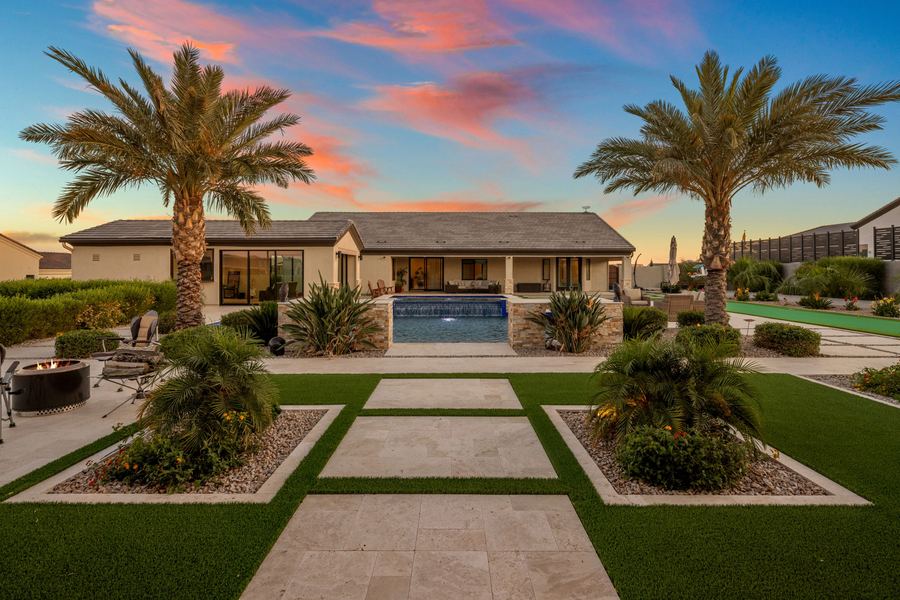
The material shapes how the yard feels. Travertine stays comparatively cool underfoot and has a timeless resort look. Concrete pavers come in many colors and formats and are easy to repair. Large-format pavers with turf ribbons read modern, and stacked-stone veneers add texture to walls, seat walls and fire features.

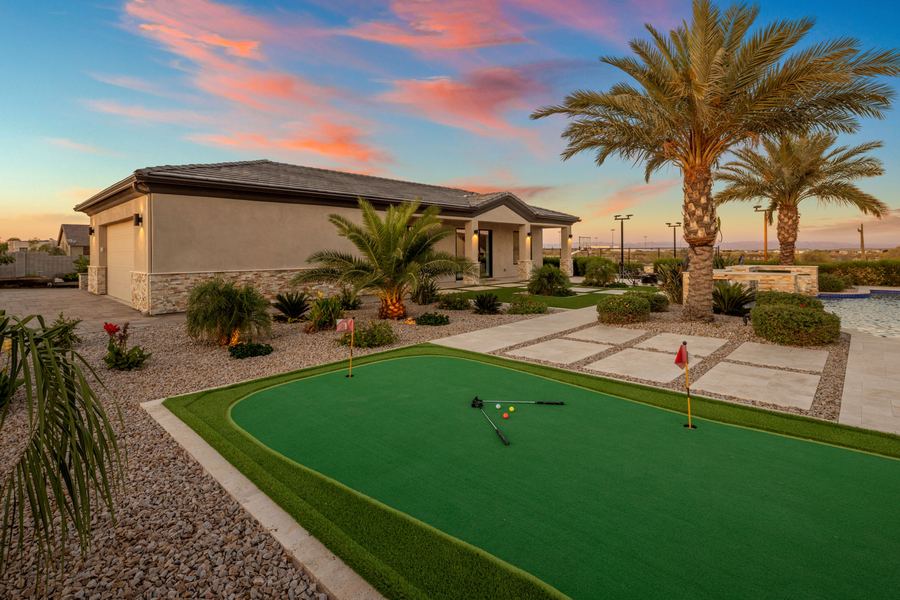
Sport courts and putting greens get the same rigor. A pickleball court needs a flat, well-drained slab, the right surface and lighting that does not spill into a neighbor's window. Our write-up inside Legacy Living shows how a court can sit below a pool terrace and still feel part of the yard.

What We Build

Surfaces for Living and Play

01

Pool decks

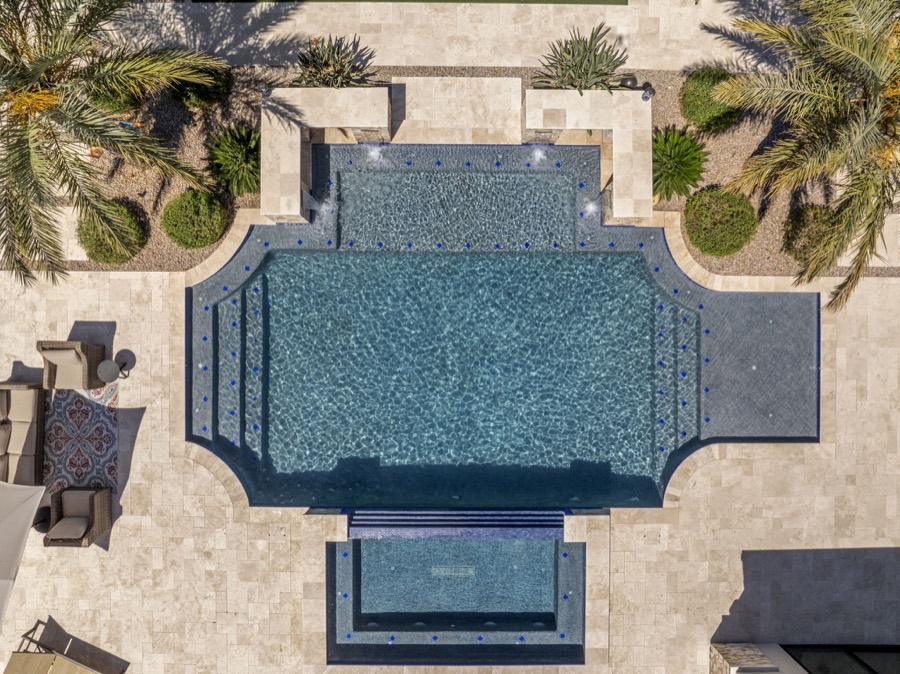
Travertine or pavers sloped away from the water, with coping that is comfortable to sit on and easy to grip.

02

Patios and paths

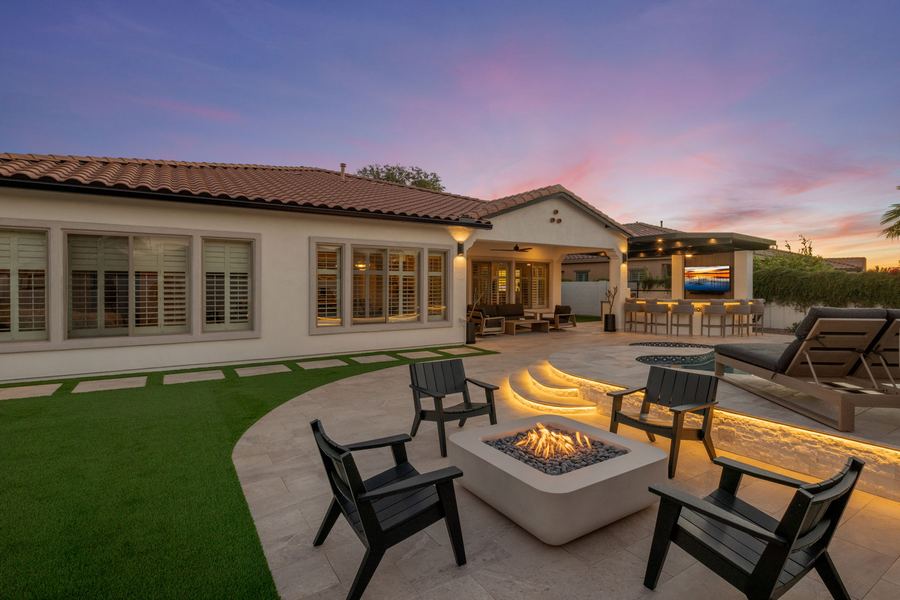
Dining and lounge terraces sized to real furniture, linked by paths wide enough to walk side by side.

03

Retaining and seat walls

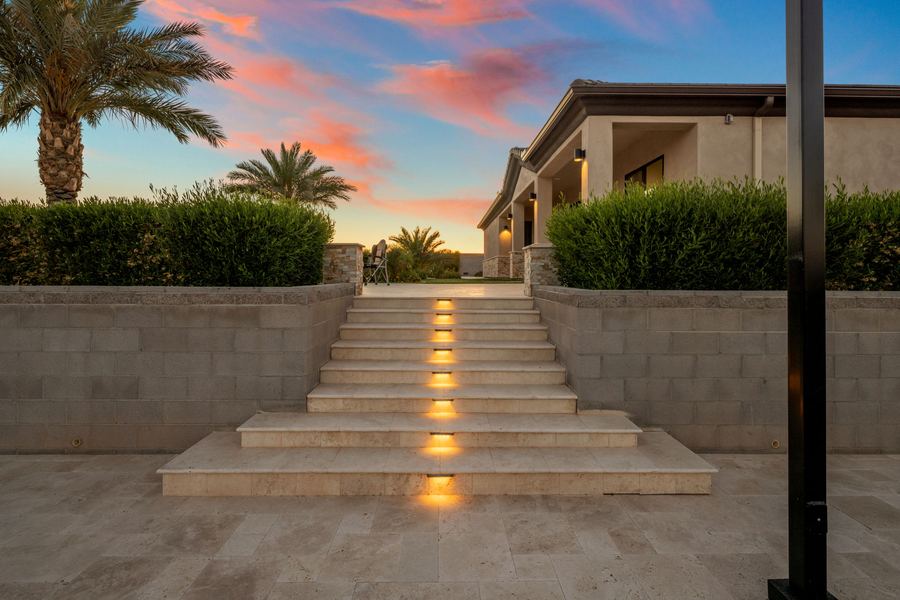
Engineered walls that manage grade changes, faced in stone or stucco and topped to double as seating.

04

Pickleball courts

A full-size playing area on a flat, drained slab with a textured surface, fencing and lighting for evening games.

05

Putting greens

Synthetic greens with contoured breaks and fringe, close enough to the lounge that a few putts fit into any afternoon.

06

Driveways and entries

Paver drives and front walks that carry the backyard design out to the street.

Planning a court, a green or a new deck? We will lay it out on your lot during a free design call.

Book a Design Call or price it yourself in the Dream Center
Built for Arizona

Hard Surfaces in a Hard Climate

Arizona tests paving with heat, storms and stubborn soil.

Heat

Cool underfoot

Dark paving can get painfully hot by afternoon. Lighter travertine and pavers reflect more sun, and turf ribbons and shade break up large expanses of stone.

Caliche

A base that holds

Caliche is hard but uneven, with pockets of soft soil beside it. Proper excavation and a compacted base keep pavers from settling and slabs from cracking.

Monsoon

Drainage first

Storm water has to leave fast. Decks are sloped, drains and channels sit at the low points, and grades carry water away from the house, the pool and the court.

Movement

Joints that flex

Heat makes stone and concrete grow and shrink. Expansion joints, flexible paver joints and solid edge restraint let a surface move without breaking.

The Process

From Grade to Game Night

Study the ground

At the site visit we check grade, drainage paths, access and the soil the base will sit on.

Design the layout

Decks, walls, courts and greens are mapped in 3D, with pricing in a proposal that arrives within a week.

Engineer and permit

Retaining walls, court lighting and drainage are engineered and permitted, typically two to four weeks.

Excavate, base, lay

The crew excavates, compacts the base, sets drainage and lays stone, turf and surfacing to plan.

See the Full Arise Method

Hardscape FAQ

Questions About Decks and Courts

Is travertine or pavers better for a pool deck in Arizona?

Both perform well. Travertine stays comparatively cool underfoot and has a classic resort look. Concrete pavers offer more colors and formats and are easy to repair. Lighter colors of either stay cooler, and you can compare samples in our design studio.

How much space does a pickleball court need?

The playing area is 20 by 44 feet, and a comfortable court with room to move around the lines is typically closer to 30 by 60 feet. We check your lot, setbacks and grade before recommending a size.

Can a sport court have lights?

Yes. LED court lighting makes evening play possible, which is when most Arizona summer games happen. We aim fixtures to light the court without spilling into neighboring yards and check HOA and city lighting rules.

Do retaining walls need engineering?

Walls that hold back significant soil or support a structure usually need engineering and a permit. We design and permit them as part of the project so the wall is safe and drains properly.

Will my pavers sink or crack over time?

Not when the base is done right. Most settling and cracking comes from a thin or poorly compacted base, missing edge restraint or poor drainage. We build the base for the soil we find and slope every surface to drain.

Proudly Serving

Hardscape Across the East Valley

Larger lots in San Tan Valley and Queen Creek have room for courts and greens, while yards in Gilbert, Chandler, Mesa and Scottsdale often start with a new deck or patio.

Start Your Project

Four Questions to Your Design Call

Tell us what you want to build, your budget and timing, then pick a time for a free 30-minute call with our design manager.